


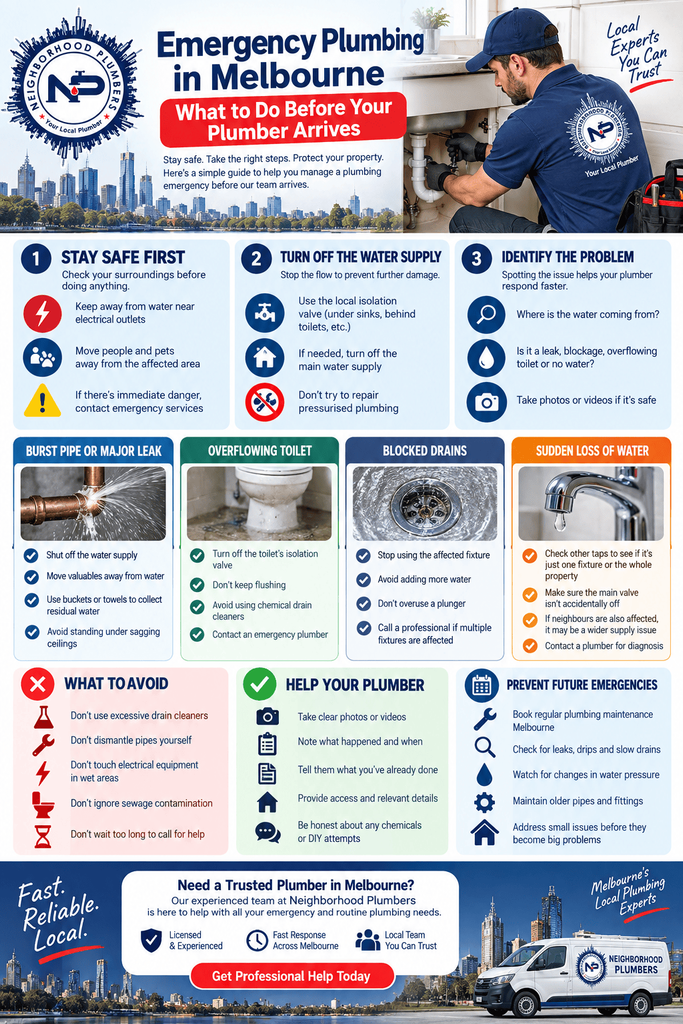
A burst pipe, overflowing toilet, blocked drain or sudden loss of water can turn an ordinary day into a stressful situation very quickly. In an emergency, the first few minutes often matter more than people realise. Knowing what to shut off, what to avoid touching and what information to give your plumber can help limit property damage and make the repair process more efficient.
When searching for plumbers in Melbourne during an emergency, most people understandably want someone who can respond quickly. But while you are waiting for professional help, there are several safe and practical steps you can take yourself.
This guide explains what to do before plumbers Melbourne arrive, depending on the type of plumbing emergency you are dealing with. It also covers common mistakes, preparation tips and situations where attempting a DIY repair can make the problem considerably worse.
Why Acting Quickly Matters During a Plumbing Emergency
Water can travel surprisingly far inside a property. A leak that appears to be confined to a kitchen cabinet, bathroom wall or ceiling may be affecting flooring, cabinetry, plasterboard or electrical components nearby.
The longer uncontrolled water remains inside a property, the greater the possibility of secondary damage.
A fast response does not necessarily mean attempting to repair the plumbing yourself. In many situations, the most useful thing a homeowner can do is contain the problem safely while waiting for a qualified professional.
For example, if a flexible hose beneath a kitchen sink suddenly fails, turning off the relevant isolation valve can stop water flowing while you arrange assistance. If the isolation valve cannot be located or operated, shutting off the property’s main water supply may be necessary.
The important distinction is between controlling an emergency and attempting a repair without the appropriate knowledge or equipment.
First Step: Stay Safe and Assess the Situation
Before reaching for a tool, take a few seconds to assess what has happened.
Ask yourself:
If water has reached electrical equipment, do not walk through standing water to reach a switchboard or electrical appliance. Electrical hazards can be difficult to see.
If there is immediate danger, move people and pets away from the affected area and contact the appropriate emergency service.
Once the immediate safety issue is under control, contact professional plumbers Melbourne and explain what you can see. Clear information can help the plumber understand the urgency before arriving.
What to Do When You Have a Burst or Major Water Leak
A burst pipe is one of the situations where quick action can make a significant difference.
Shut Off the Water Supply
If you can safely identify the source of the leak, look for a nearby isolation valve. These are commonly found beneath sinks, behind toilets or near individual fixtures.
If the local valve is unavailable, damaged or ineffective, locate the property’s main water isolation point.
Turn the supply off rather than repeatedly trying to tighten, remove or dismantle the damaged fitting.
A homeowner does not need to understand the entire plumbing system to take this first containment step. The objective is simply to stop or reduce the water flow until the plumbing contractor arrives.
Move Valuable Items Away From Water
Once the water supply has been controlled, move furniture, boxes, rugs, electronics and other portable belongings away from the affected area.
Do not prioritise possessions over personal safety. If something is heavy, located in standing water or close to an electrical hazard, leave it alone.
A few minutes spent moving undamaged belongings can sometimes prevent additional losses.
Collect Water Safely
Use buckets, towels or containers where practical to catch residual water.
However, do not create a trip hazard by covering walkways with loose towels or cables.
If water is coming through a ceiling, avoid standing directly beneath a visibly swollen or sagging section. Water accumulating above plasterboard can add substantial weight to the ceiling.
What to Do About an Overflowing Toilet
An overflowing toilet can quickly create a much bigger cleanup problem.
Stop the Flow Before Cleaning Anything
The first priority is preventing additional water from entering the bowl.
If the toilet has an accessible isolation valve, turn it off carefully. Depending on the toilet design, the valve may be located on the wall or floor connection near the cistern.
If you cannot safely stop the supply, contact an emergency plumber rather than repeatedly flushing the toilet.
Do not continue flushing in the hope that the blockage will clear itself. If the drain is blocked, another flush can send more water onto the bathroom floor.
Be Careful With Chemical Drain Products
A common misconception is that pouring a strong chemical drain cleaner into a blocked toilet is a quick solution.
It can create additional risks.
Some products may not be suitable for toilets, and chemical residue can become hazardous if a plumber later needs to dismantle the plumbing or use specialised equipment.
Tell the plumber if you have already used any chemical product. This information allows them to take appropriate precautions.
If a Sink, Shower or Floor Drain Is Blocked
Blocked drains range from minor household inconveniences to serious drainage problems.
If water is draining slowly, reduce your use of the affected fixture until the cause is understood.
If several fixtures begin draining slowly at the same time, or wastewater starts returning through a floor drain, the problem may extend beyond a single fixture.
This is where plumbing services become more than simply clearing a visible obstruction. A professional may need to determine whether the issue involves a branch drain, larger wastewater line or another section of the drainage system.
Avoid Repeatedly Adding Water
If a sink or shower is already holding water, avoid running more water to “test” whether it has cleared.
Repeated testing can turn a partial blockage into an overflow.
Don’t Keep Forcing a Plunger
A plunger can be useful for some straightforward blockages. But aggressive plunging is not appropriate for every plumbing situation.
If there is a suspected damaged pipe, unusual gurgling, sewage backup or persistent blockage, stop experimenting and arrange professional assistance.
When You Lose Water Suddenly
Not every plumbing emergency involves too much water. A sudden loss of water can also indicate a serious issue.
First determine whether the problem affects:
Check whether the property’s main isolation valve has accidentally been closed and whether other taps have water.
If neighbouring properties are also affected, the issue may involve the wider water network rather than your internal plumbing.
If the loss of supply is isolated to your property and you cannot identify the cause, contact a qualified plumber for assessment.
What Professional Plumbers Melbourne Look For
An experienced plumber does more than locate the obvious leak.
When arriving at an emergency, they typically need to establish several things:
For example, a wet patch on a wall does not necessarily mean the visible area is the source of the leak. Water can travel along pipes, framing and building materials before appearing somewhere else.
This is one reason an experienced assessment is valuable.
Plumbing Maintenance Melbourne Can Prevent Some Emergencies
Not every plumbing emergency can be predicted. Pipes can fail unexpectedly, fittings can deteriorate and extreme weather can expose weaknesses in drainage systems.
However, regular plumbing maintenance Melbourne can identify many developing problems before they become major failures.
Warning signs worth paying attention to include:
A small leak may seem insignificant when first noticed. Ignoring it can allow moisture to remain inside cabinetry, walls or flooring for an extended period.
Maintenance is particularly useful in older properties where plumbing materials, joints and fixtures may have experienced years of wear.
How to Help Your Plumber Work Faster
You can make the emergency visit more efficient by gathering useful information before the plumber arrives.
Take Photos or Videos
If it is safe, photograph the affected area before moving items or cleaning up.
Useful images may show:
Photos taken during the initial incident can also help if the visible problem changes after the water is turned off.
Note What Happened
Try to remember what happened immediately before the problem appeared.
For example:
“The kitchen tap was working normally, then water suddenly appeared inside the cabinet.”
is more useful than simply saying:
“The sink is leaking.”
Likewise, tell the plumber if the blockage developed gradually or appeared suddenly.
Tell Them What You Have Already Done
Mention whether you:
This information can affect how the plumber approaches the job.
When an Affordable Plumber Melbourne Is Still a Professional Priority
During an emergency, price understandably matters. Homeowners often search for an affordable plumber Melbourne because unexpected plumbing repairs can put pressure on the household budget.
Affordable does not necessarily mean choosing the first low-priced option you find.
Before work begins, ask what is included in the quoted or estimated cost. Depending on the situation, you may also want to clarify:
A transparent conversation about pricing can prevent misunderstandings later.
At the same time, avoid choosing solely on price when water is actively damaging your property. The quality and suitability of the repair can matter more than saving a small amount on the initial call-out.
Common Mistakes People Make During Plumbing Emergencies
Waiting Too Long
A small leak is often easier to manage than a major water release.
If you notice an active leak that you cannot control, arrange professional assistance rather than waiting to see whether it stops.
Trying to Repair Pressurised Plumbing
Removing fittings while water remains under pressure can cause sudden water release and make the situation worse.
Control the water supply first.
Ignoring Water Near Electricity
This is one of the most important safety considerations.
Do not assume standing water is safe simply because you cannot see exposed electrical wiring.
Using Too Much Drain Cleaner
More chemical does not necessarily mean better results. In some circumstances, it creates additional hazards without addressing the underlying obstruction.
Removing Pipework Without Understanding the System
Taking apart a trap or fitting may appear straightforward, but it can lead to leaks, damaged seals or contaminated wastewater being released into the property.
If the situation is beyond simple containment, leave the repair to licensed plumbers Melbourne.
Practical Advice for Renters and Property Managers
Renters should generally notify their property manager or landlord as soon as practical when a significant plumbing issue occurs, while also taking reasonable steps to prevent further damage where it is safe to do so.
Property managers can benefit from having emergency procedures documented in advance.
A useful emergency plumbing information sheet can include:
Having this information available before an emergency happens can reduce confusion when everyone is under pressure.
What You Should Never Do During a Plumbing Emergency
Some actions are simply not worth the risk.
Avoid:
Your role before the plumber arrives is primarily containment, safety and communication.
The professional’s role is diagnosis, repair and determining whether further work is necessary.
Expert Tips for Melbourne Homeowners
From a practical perspective, three habits make plumbing emergencies much easier to manage.
Know where your main water shut-off is. Don’t wait until a pipe bursts to start looking for it.
Keep basic information accessible. If you live in a rental, know who should be contacted for urgent maintenance. If you own the property, keep details of previous plumbing work.
Treat early warning signs seriously. Recurring blockages, damp smells and unexplained moisture are not always harmless inconveniences. They can indicate a developing plumbing problem.
These simple measures will not prevent every emergency, but they can reduce the time between discovering a problem and getting it under control.
Final Thoughts: Preparation Can Make a Plumbing Emergency Easier
A plumbing emergency is stressful, but you do not necessarily need to solve the plumbing problem yourself.
The most useful actions are usually straightforward: stay safe, stop the water supply where possible, protect belongings, avoid risky DIY repairs and give the plumber accurate information about what happened.
Whether you are dealing with a burst pipe, blocked drain, leaking fixture or overflowing toilet, the goal before professional help arrives is to limit damage without creating another hazard.
For homeowners researching an affordable plumber Melbourne, it is worth looking beyond the initial price and considering response, licensing, transparency and the quality of the proposed repair. Choosing appropriately qualified plumbers in Melbourne and keeping up with routine maintenance can also help reduce the likelihood of repeat emergencies.
Frequently Asked Questions
1. What should I do first when a pipe bursts in my Melbourne home?
Turn off the nearest isolation valve or the property’s main water supply if you can do so safely. Then move belongings away from the water and contact a qualified plumber. If water is near electrical equipment, avoid entering the affected area and treat it as a potential electrical hazard.
2. Should I use drain cleaner before calling an emergency plumber?
Generally, avoid adding chemical drain cleaner when you are already arranging professional assistance. The product may not be appropriate for the plumbing system and can create a chemical hazard during subsequent repair work. Tell your plumber about any products you have already used.
3. How can I tell whether a blocked drain is a serious plumbing problem?
A blockage deserves more attention when it repeatedly returns, affects multiple fixtures, causes wastewater to back up or produces persistent gurgling and unpleasant odours. These signs can indicate that the problem extends beyond a simple blockage at one fixture.
4. Is it worth having plumbing maintenance performed if everything appears to work normally?
Yes. Routine inspections can identify deteriorating fittings, leaks, corrosion, drainage issues and other developing problems before they result in an emergency. Plumbing maintenance Melbourne is particularly useful for older properties or homes experiencing recurring plumbing problems.
5. What information should I give plumbers Melbourne when requesting emergency assistance? Explain what happened, where the problem is located, whether water or wastewater is still flowing, which fixtures are affected and what you have already done. If safe, provide photographs or video. Also mention any drain chemicals, DIY repairs or unusual noises you noticed before the emergency.

Neighborhood Plumbers were fantastic! They fixed my leaking pipes quickly and professionally. Great service, fair pricing, and friendly staff. Highly recommended!

Called Neighborhood Plumbers for a blocked drain, and they sorted it out efficiently. Courteous, knowledgeable, and affordable. Will definitely use them again!
Exceptional service! They arrived on time, diagnosed the issue fast, and had my hot water system running again in no time. Reliable and skilled team!


